Kashmir · Terraced gardens shaped in the Mughal period
Srinagar’s Mughal Gardens
Water channels, chinar shade, and an architectural conversation with Dal Lake and the surrounding valley.
A little history
The place behind the view
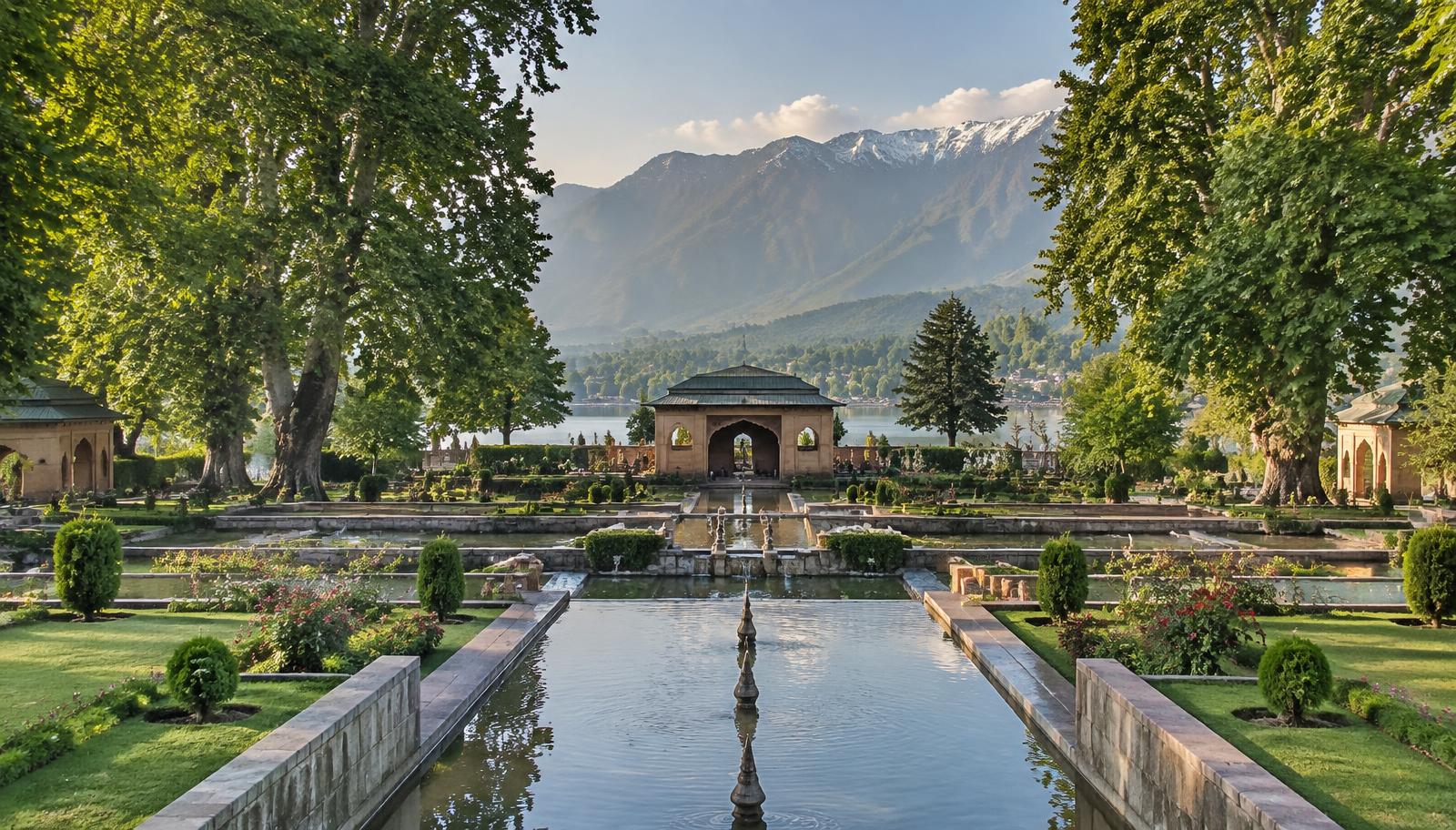
Shalimar Bagh and Nishat Bagh are celebrated products of Mughal patronage in seventeenth-century Kashmir, built upon an older local appreciation for gardens. Shalimar was commissioned by Jahangir, while Nishat is associated with his brother-in-law Asaf Khan. Their terraces, pavilions, channels, and planted axes adapt the Mughal garden tradition to the valley's topography and water.
Srinagar's gardens invite a slower kind of looking. At Nishat, the terraces draw my eye between Dal Lake and the mountains, so that the distant landscape becomes part of the composition. At Shalimar, pavilions and channels create a more courtly sequence of spaces. In both, water is never just decoration: it moves, reflects, cools, and gives the garden its sound.
The history is layered. Kashmir's rulers and communities valued designed landscapes before the Mughals, and the later gardens developed within that setting. Instead of seeing them as a style simply transported from elsewhere, I notice how local trees, spring water, slopes, and views reshape the idea. The chinar is especially powerful, marking the seasons and giving the stonework a living frame.
These were also social landscapes, associated at different times with royalty, reception, leisure, and public enjoyment. Today, families and visitors bring another kind of life to the terraces. I like arriving with enough time to sit rather than only photograph the central axis. From a quiet corner, the relationship between leaf shade, running water, carved stone, and mountain air becomes the real story.
“I find the gardens most beautiful when I follow the water uphill. Each terrace changes the view, and the chinars make the architecture feel part of the valley rather than imposed upon it.”Read the historical source: UNESCO — Mughal Gardens in Kashmir