Kashmir · A living landscape on Srinagar’s waters
Dal Lake
Shikaras, floating gardens, carved houseboats, and a distinctive culture shaped by life on the water.
A little history
The place behind the view
Dal Lake has long been woven into Srinagar's economy, food systems, transport, and ideas of beauty. Mughal gardens along its shores made the lake part of imperial landscape design, while wooden houseboats became prominent during the late nineteenth and early twentieth centuries. Floating vegetable gardens and shikara-based livelihoods continue older, highly adapted ways of using the wetland.
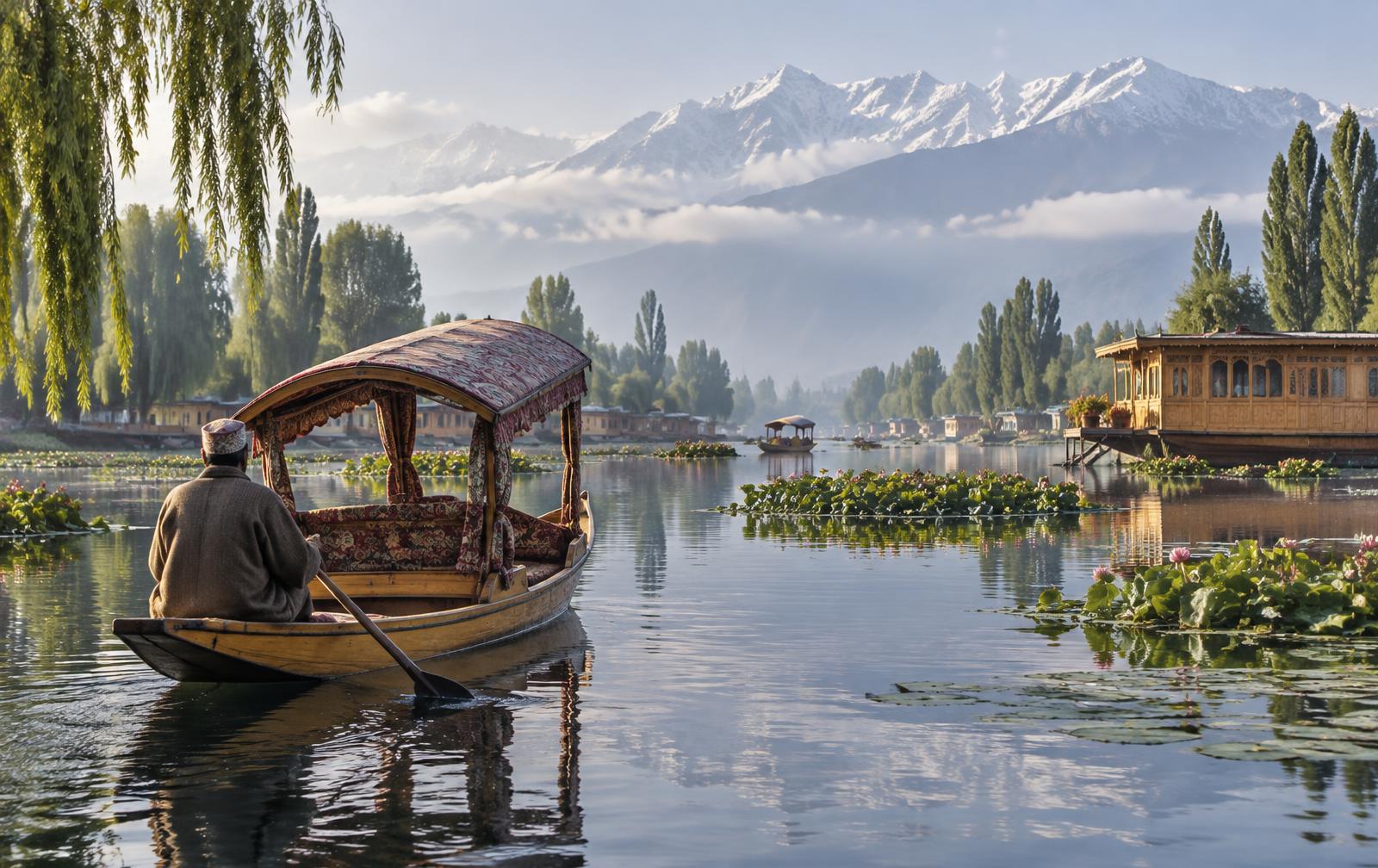
A shikara moves quietly enough for me to notice the lake's many rhythms. A boat carrying produce passes a visitor's canoe; willows overhang narrow channels; floating gardens reveal an intimate knowledge of water and season. From the shore, Dal can appear like one broad scenic surface. From a small boat, it becomes a network of routes, workplaces, homes, and cultivated plots.
The carved wooden houseboats introduce another chapter in Srinagar's history. Their interiors often display walnut woodwork and patterned decoration, showing how local craft adapted to a new form of hospitality. I find that combination compelling: an experience associated with travel rests on skills deeply rooted in Kashmir. The lake's visual charm is inseparable from the labour of boat builders, woodworkers, gardeners, and boatmen.
Dal is also a fragile environment, and appreciating it honestly means acknowledging pressure from pollution, encroachment, and changing livelihoods. Its beauty should not make those concerns invisible. I leave with a stronger respect for the people whose knowledge sustains the lake, and with the feeling that responsible travel begins by seeing a living community rather than consuming a view.
“Dal Lake becomes memorable when I stop looking at it as a postcard. The shikara is transport, the garden is a workplace, and the reflection on the water belongs to somebody's everyday morning.”Read the historical source: Srinagar District — Dal Lake