Rajasthan · A Rajput capital across many centuries
Chittorgarh Fort
Vast ramparts, commemorative towers, and sacred places shaped by power, devotion, and memory.
A little history
The place behind the view
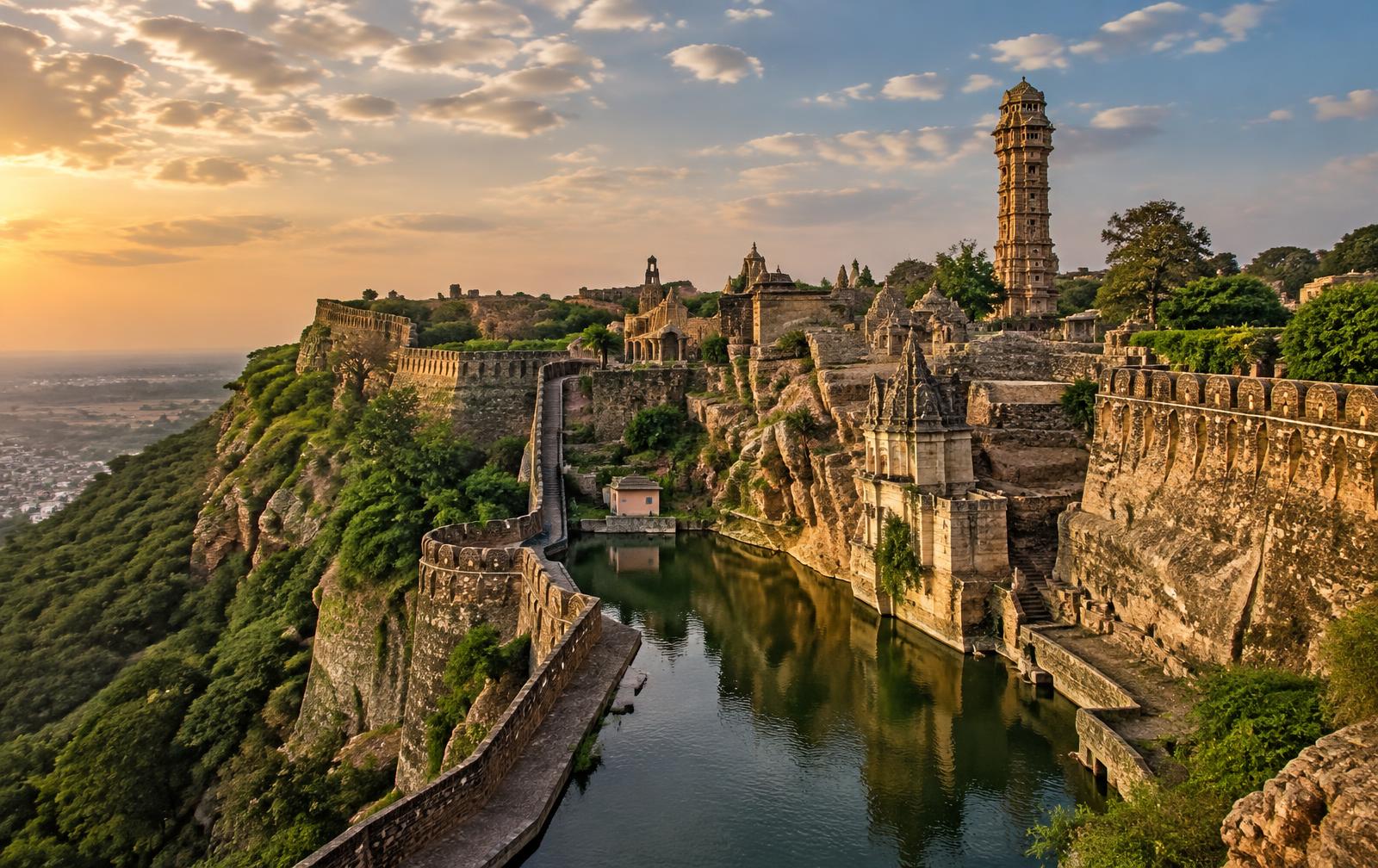
Chittorgarh was the capital of Mewar before Udaipur and is among the Hill Forts of Rajasthan recognized by UNESCO. Its long record of occupation includes remains from the eighth to sixteenth centuries. The fort contains palaces, temples, towers, reservoirs, and commemorative structures associated with Mewar's rulers and with the community's traditions of courage and sacrifice.
Chittorgarh asks for time. The ramparts stretch across the plateau, and the monuments within them are far enough apart that the journey itself becomes part of the visit. As I move between sites, the views repeatedly open across the surrounding country. That geography explains both the fort's defensive value and the emotional force of its skyline.
The Vijay Stambha, or Tower of Victory, draws me closer to the world of Rana Kumbha in the fifteenth century. Its carved surfaces combine political commemoration with sacred imagery, making it much more than a marker of military success. Elsewhere, temples and reservoirs show how ritual, water, and collective life were built into the fortified landscape. These were essential systems, not secondary details.
Chittorgarh is also inseparable from stories carried by poetry, performance, and family memory. I try to listen to those traditions while remembering that a historic site is never a single episode frozen in stone. It is a layered landscape of political power, religious devotion, artistic achievement, and the lives that unfolded within the walls. The empty spaces between monuments leave room for all of those histories.
“The fort's immense scale makes me think about how a place can hold many kinds of memory at once. Palaces, temples, and defensive walls each tell a different part of its story, and none feels separate from the landscape around it.”Read the historical source: UNESCO — Hill Forts of Rajasthan